
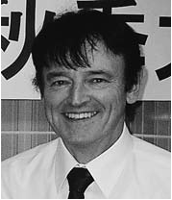
Professor Thomas Dunne is one of the most famous and distinguished geomorphologists in the world. As a professor of Environmental Science & Management, and of Earth Science at the University of California Santa Barbara, he is conducting field and theoretical research and education in fluvial geomorphology and in the application of hydrology, sediment transport, and geomorphology to landscape management and hazard assessments.
He has worked in many parts of the world, including Kenya, where he studied the effects of land use on hill-slope erosion and river-basin sedimentation, and how climate and hydrology affect long-term hill-slope evolution. At the University of Washington, he focused on land sliding and debris flows, as well as tephra erosion and debris-flow sedimentation resulting from the eruption of Mount St. Helens. The resource management issues he studied in the Pacific Northwest include the impacts of gravel harvesting on river channels and floodplains and the impacts of timber harvesting on erosion and sedimentation. Since moving to UC Santa Barbara in 1995, he has studied erosion in the Andes, and hydrology, sediment transport, and floodplain sedimentation in the Amazon River basin of Brazil and Bolivia and the Central Valley of California.
Professor Dunne has contributed to the development of the Japanese Geomorphological Union continuously from its establishment up to today as follows: He was the key person in the Commission on Field Experiments in Geomorphology of the International Geographical Union which commission indirectly promoted the establishment of JGU, and he participated the 1980 Commission Meeting in Kyoto that was organized by core members of JGU, in which he made an enormous impact by a special talk on ‘Hazards and Landscape Evolution resulted from the 1980 Eruption of Mount St. Helens’. He has been a member of JGU since its early stage. His second visit to Japan was in 1984 when the Erosion Control Engineering Society of Japan invited him to present a lecture on ‘Flood and sedimentation hazards around Mt. St. Helens’ at their annual meeting in Kyoto. The talk resulted in two papers in Shin-Sabo, J. Erosion Control Engineering Soc. Japan, entitled ‘Estimation of flood and sedimentation hazards around Mt. St. Helens (1), 36(4), 12-22, 1984 and (2), 37(1), 13-22, 1984. His third visit to Japan was in 1989, when JGU invited him as a distinguished guest to give a special lecture at the 10th anniversary meeting of JGU in Kyoto, entitled as ‘Stochastic Aspects of the Relations between Climate, Hydrology and Landform Evolution’, which appeared as an article in the Transaction of JGU Vol.12, No.1, 1-24. His fourth visit was in 2001, when IAG 2001 Tokyo invited him to give a plenary lecture entitled ‘Sediment Transport and Sedimentation along Lowland Rivers’.
In addition, he kindly hosted many JGU members at the University of Washington and University of California at Santa Barbara, as guest researchers including Drs. Masashige Hirano, Kiyoshi Sekine, Takahiko Furuya, Yoshinori Kodama, Kazuo Okunishi, Takasuke Suzuki, Fujiko Iseya, and Hiroshi Suwa.
Thus the JGU is in his debt.
The JGU is honored to bestow Professor Thomas Dunne an Honorary Membership.
On October 3, 2009, the 30th anniversary of the establishment of the JGU, in Kyoto.
Writer: Hiroshi Suwa
TJGU 31: 131
2009年10月3日推戴
 一般社団法人 日本地形学連合